Real numbers from a Melbourne cabinet maker — what a robe actually costs, what drives the price up, and where the money is genuinely worth spending.
3.5 m = $4,200
$2,800Built-in from
$4,500Walk-in from
$1,200Per metre
KJoinery Australia·Updated August 2026·10 min read
The Short Answer
A built-in wardrobe in Melbourne costs $2,800 to $15,000+
Quick answer
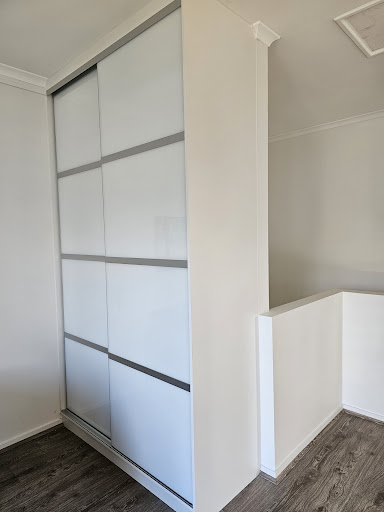
A custom built-in wardrobe in Melbourne starts around $2,800 for a simple 2.4-metre robe and runs to about $7,000 for a premium built-in. A walk-in robe starts near $4,500 and climbs past $15,000 for a large luxury fitout. As a working rule, budget around $1,200 per linear metre supplied and installed.
Wardrobe pricing is quoted strangely across Melbourne. Some companies advertise a headline number that turns out to be doors only. Others will not give you anything until someone has been to your house. Neither helps when you are simply trying to work out whether this is a $3,000 job or a $10,000 one.
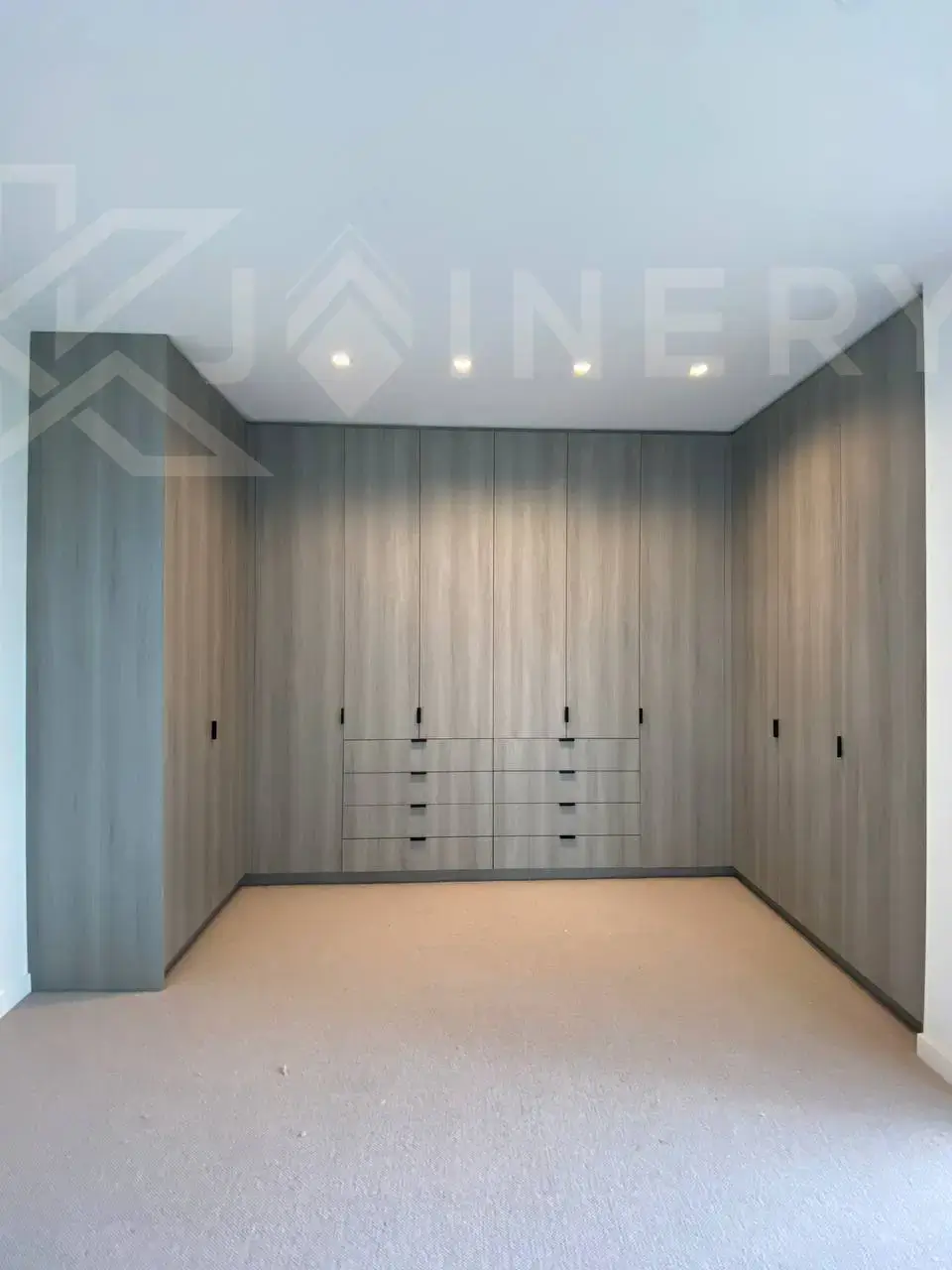
So here are our real numbers. A simple built-in robe in a standard bedroom — about 2.4 metres wide, a single hanging rail, basic shelving, hinged doors — starts near $2,800. Add drawers, mixed hanging and sliding doors and you are in the $3,500 to $5,000 band, which is where most of our wardrobe work lands. A premium built-in with a complex interior and custom finish runs $5,000 to $7,000. Walk-in robes start near $4,500 for a small one and climb past $15,000 for a large luxury fitout.
The per-metre figure is the one worth remembering, because it lets you sanity-check any quote you are given. At roughly $1,200 per linear metre, a 2.4-metre robe should be near $2,880 and a 3.5-metre wall of robes near $4,200. If a quote is dramatically under that, something has been left out. If it is dramatically over, ask what you are paying for.
One thing the per-metre rule does not do is keep shrinking. Design, measure, delivery and a day on site cost the same whether the robe is 1.8 metres or 2.4, so there is a practical floor of about $2,800 on any custom built-in. A very small robe is not proportionally cheaper — which is exactly why going wider, or going to the ceiling, is such good value.
If you remember one number, remember $1,200 a metre. It is the fastest way to tell a real quote from a headline.
The Three Brackets
What each price actually buys you
Almost every wardrobe we build falls into one of three brackets. The jump between them is less about luxury than about size and what is happening behind the doors.
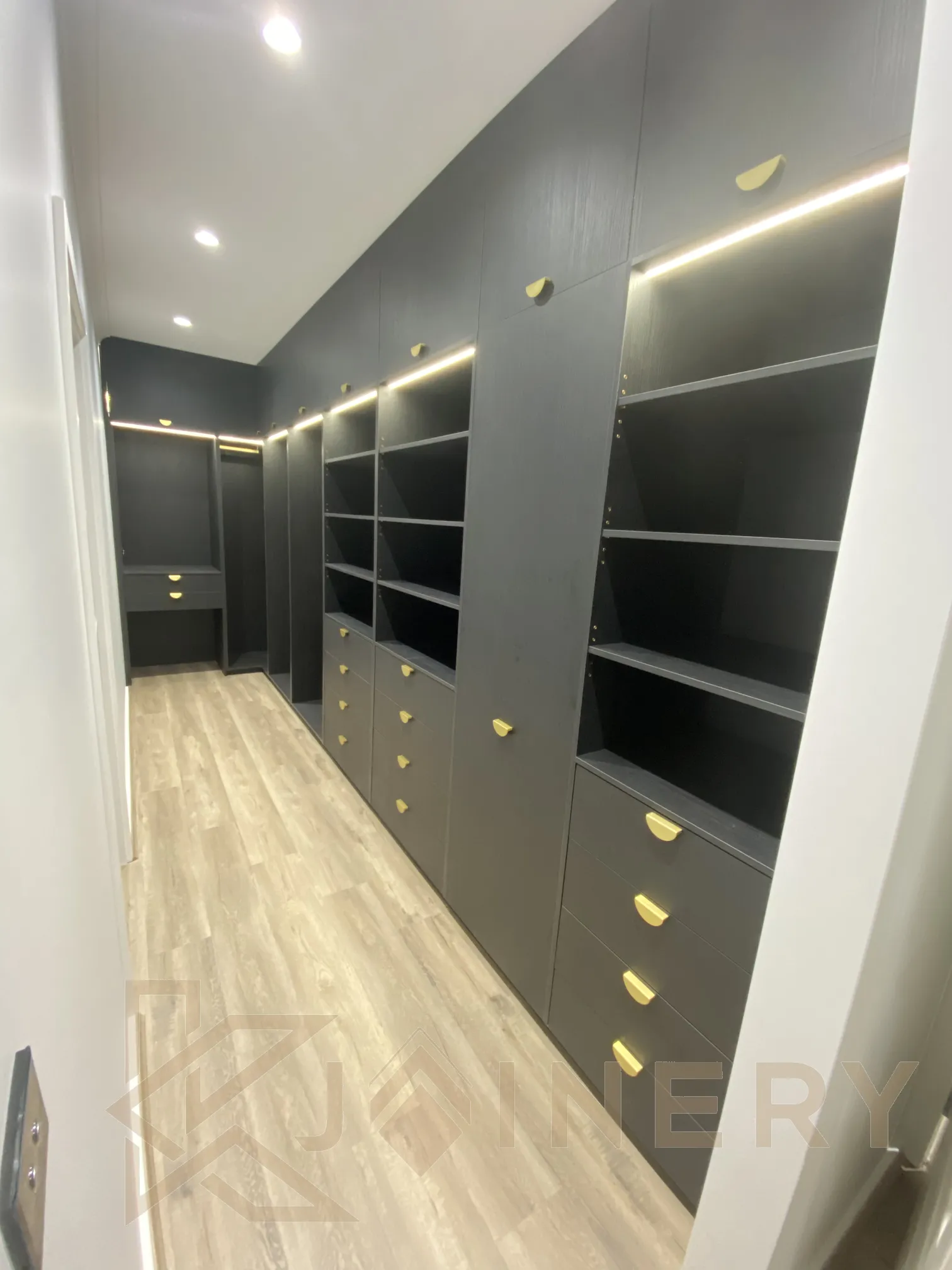
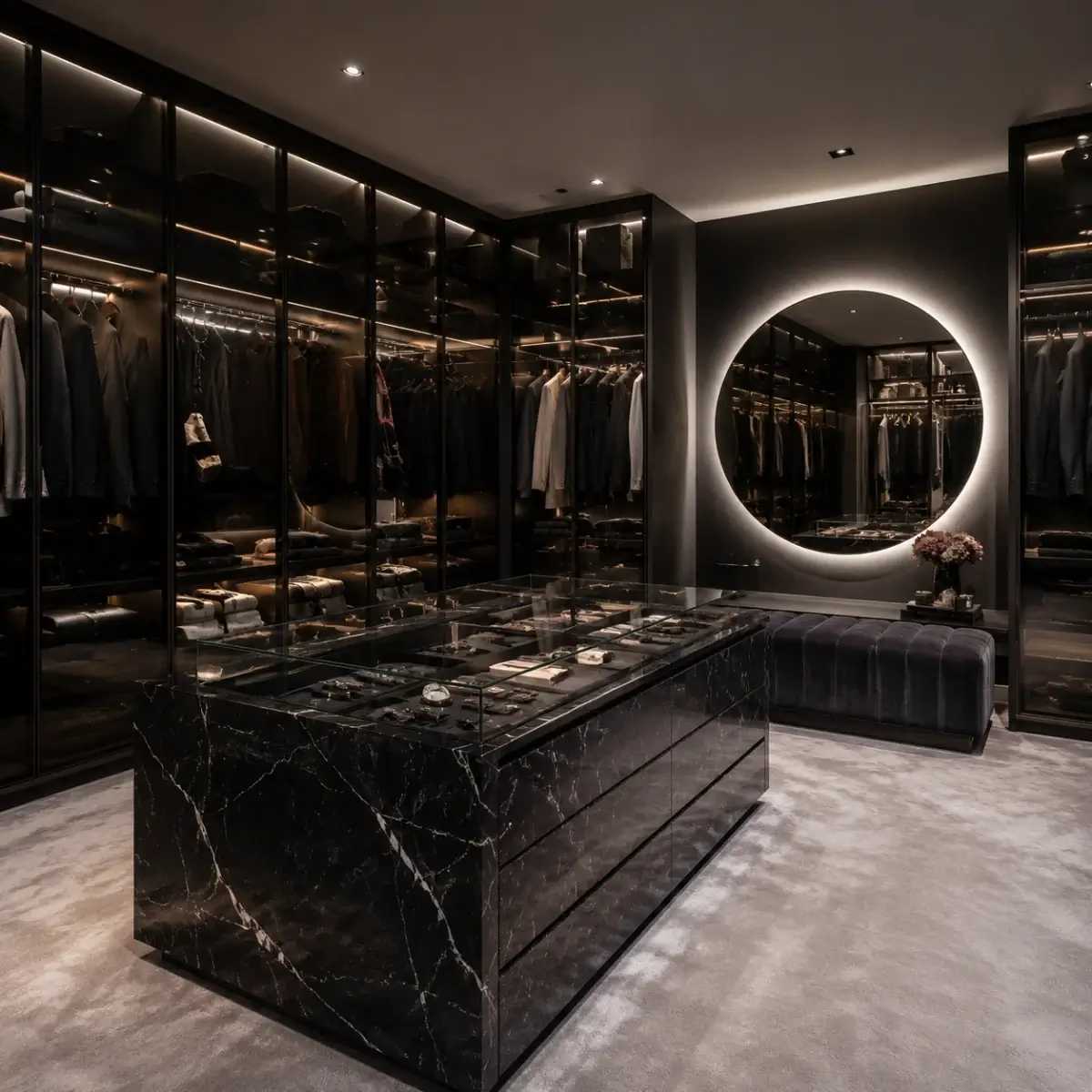
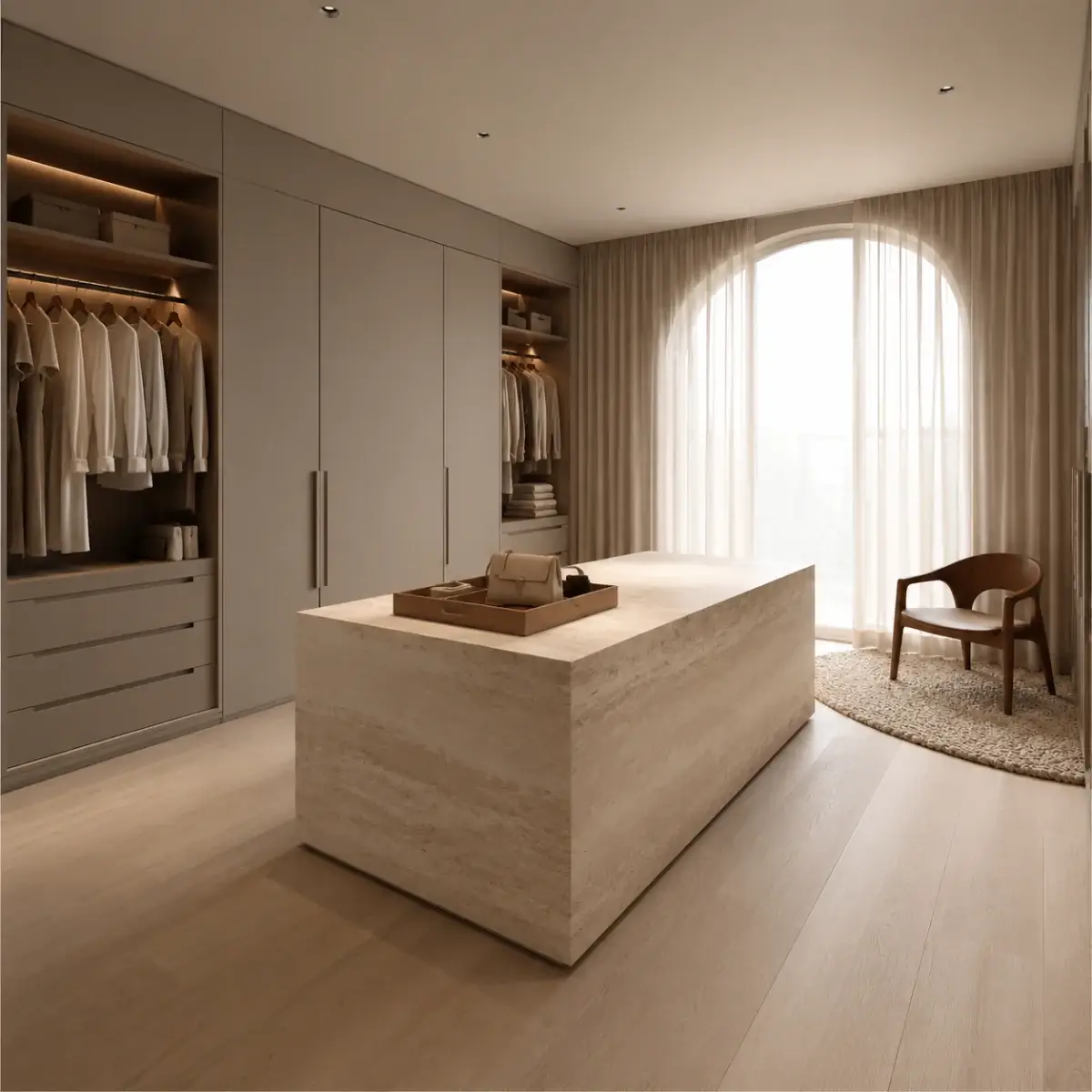
Walk-in robeCustom internals, integrated lighting, island
$4,500+
priced by the room, not the wall
Supplied and installed, GST inclusive. Walk-in robes run to $15,000+ for a large luxury fitout.
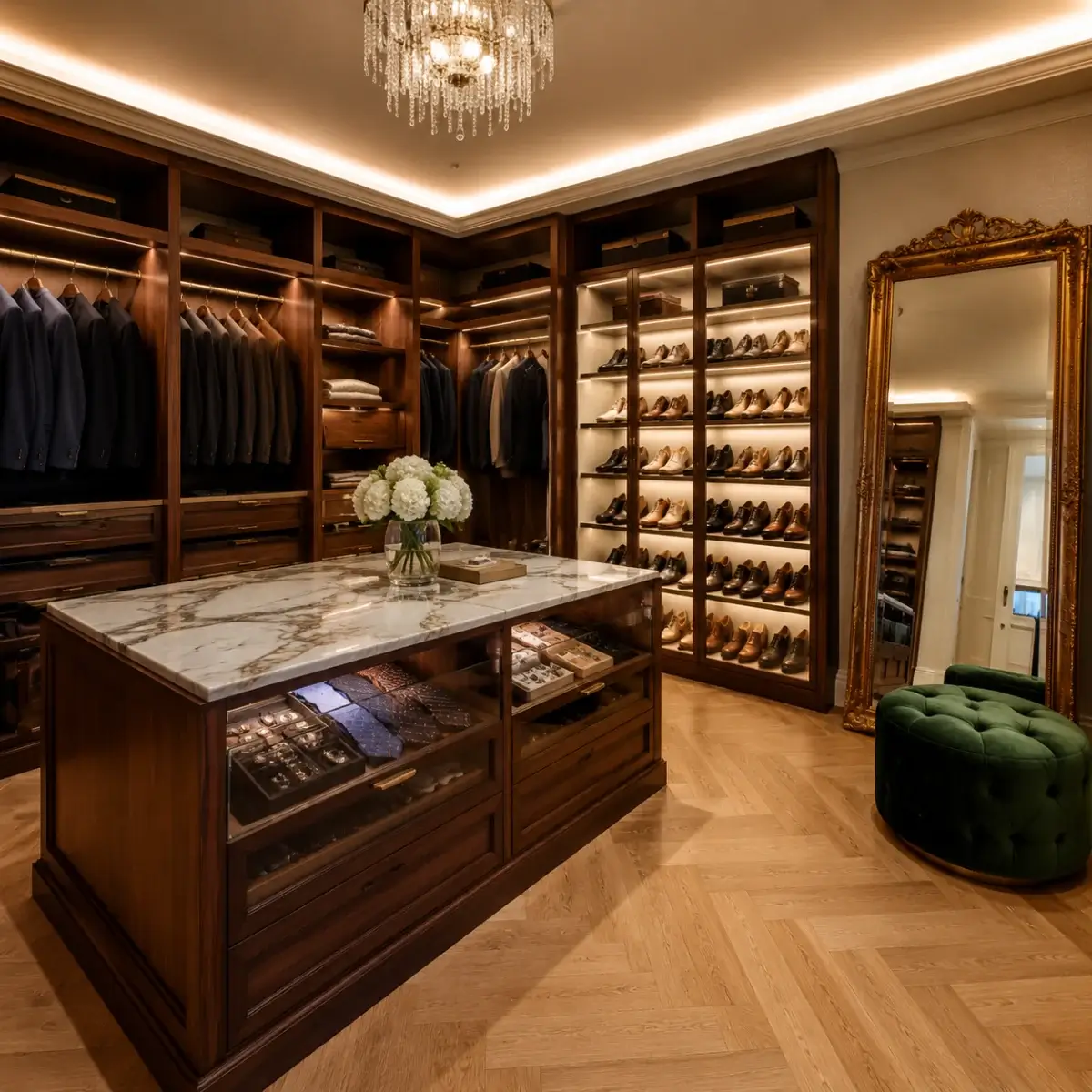
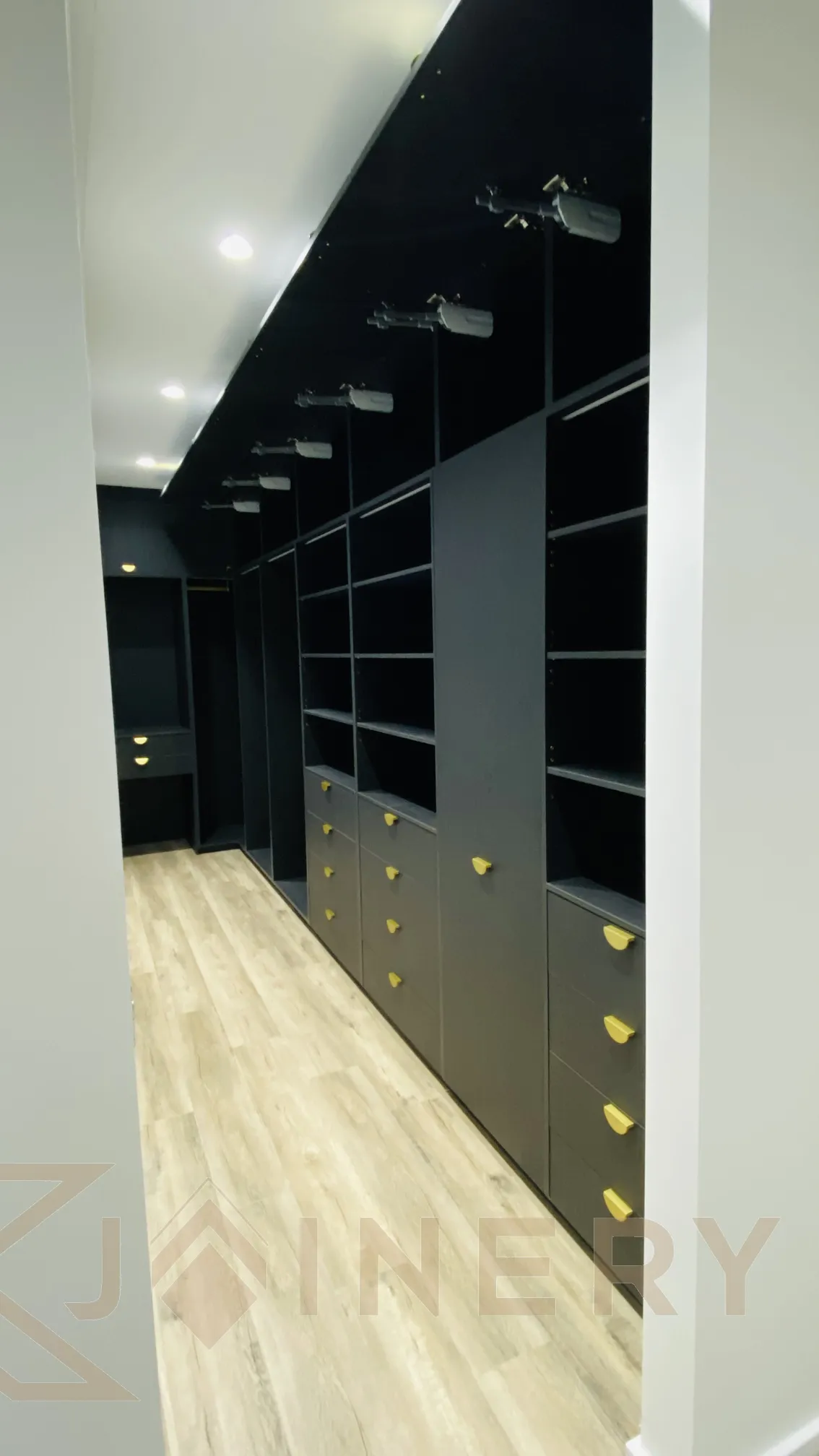
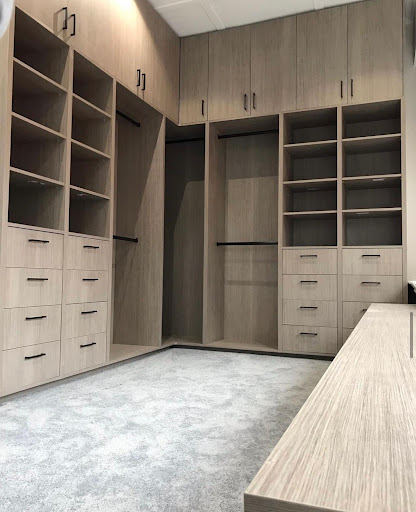
Worth being straight about walk-in robes: they are not simply more metres of the same thing, which is why they are priced by the room rather than by the wall. A small walk-in of three or four square metres starts near $4,500. A medium one with extensive storage runs $6,500 to $10,000, and a large luxury fitout with integrated seating and premium finishes reaches $15,000 and beyond. You are paying for internals designed around what you own, lighting, and a lot more setting-out on site.
Simple built-in
The standard robe
from $2,800
About 2.4 metres wide
Hanging rail and top shelf
A small bank of drawers
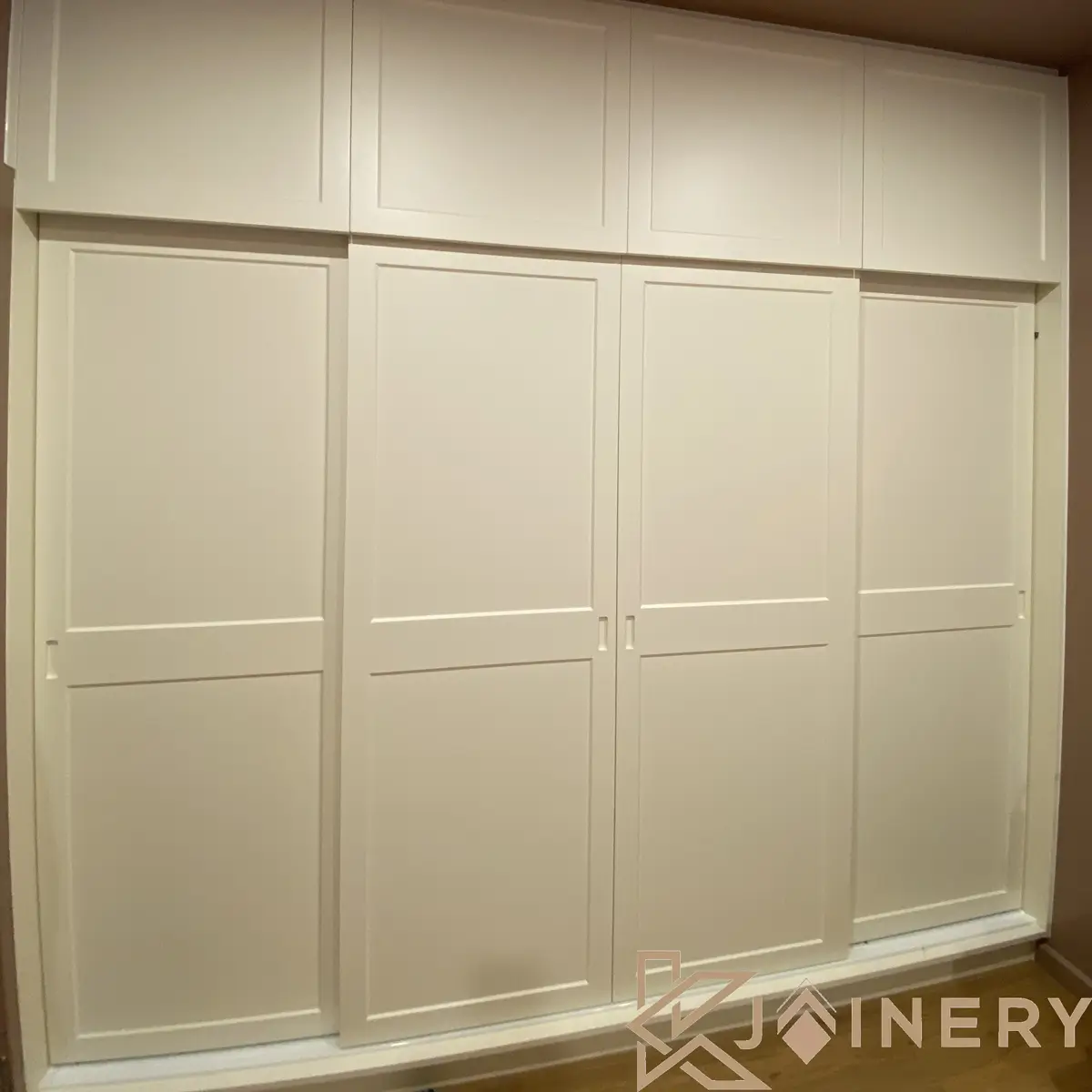
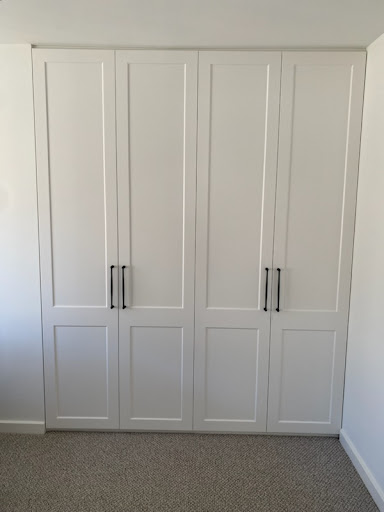
Sliding or hinged doors
Premium built-in
The full wall
$5,000 – $7,000
Around 3 metres wide
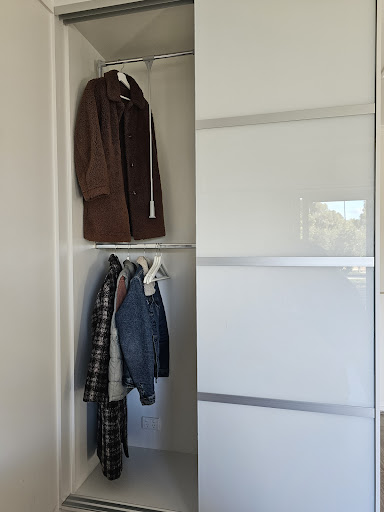
Double hang plus long hang
Deeper soft-close drawers
Adjustable shelving throughout
Walk-in
The dressing room
from $4,500
Custom internals throughout
Integrated LED lighting
Island or bench seat
Shoe, bag and jewellery storage
Cost Per Metre
Work out your own number in about ten seconds
Quick answer
Budget around $1,200 per linear metre for a built-in wardrobe, supplied and installed, with a practical minimum of about $2,800 per job. Measure the wall the robe will sit against, multiply, and you have a realistic starting figure before anyone visits.
Cabinet makers price wardrobes by the linear metre because that is genuinely how the work scales. A wider robe means more carcase, more doors, more internals and more time on site, and those climb together fairly predictably. Height matters far less than width, which is why a floor-to-ceiling robe costs only a little more than a standard-height one and gives you considerably more storage.
Estimate your wardrobe
Drag to the width of your wall.
2.4 metres$2,880 - $3,600
1 m3 m6 m
A guide only, based on our typical Melbourne rates for built-in robes. There is a practical floor of about $2,800 on any custom job. Finishes, internals and site conditions move the final number.
Use that figure the way we would: as a sanity check rather than a quote. It tells you whether the wardrobe you are imagining is realistic for the budget you have in mind, which is usually the thing people actually want to know before they pick up the phone.
Width drives the price far more than height. Going floor-to-ceiling is one of the cheapest ways to add storage.
What Moves the Price
Six things that decide your final number
Two wardrobes of identical width can be $2,000 apart. These are the levers, roughly in order of how much they move the price.
Width, first and foremost. Everything scales from the linear metre. An extra metre of robe is an extra metre of carcase, doors, internals and installation time — usually around $1,200 of it.
What is behind the doors. An empty box with one rail is cheap. Banks of soft-close drawers, pull-out shoe racks, trouser rails and jewellery inserts all add up, and this is where the biggest spread between quotes usually hides.
The doors themselves. Sliding doors cost more than hinged in most configurations, and mirrored or glass panels more again. Handleless and push-to-open profiles carry a premium over a simple handle.
The finish. Melamine is the value option and perfectly good inside a robe. Painted 2-pac fronts cost more and look considerably better. Timber-look laminates sit in between.
How square your room is. Older Melbourne homes are rarely true. Scribing cabinetry to a wall that leans, or working around skirting, cornice and a bulkhead, adds real time on site.
Lighting and power. Integrated LED strips inside a robe look excellent and are genuinely useful, but they bring in an electrician, which adds cost beyond the joinery itself.
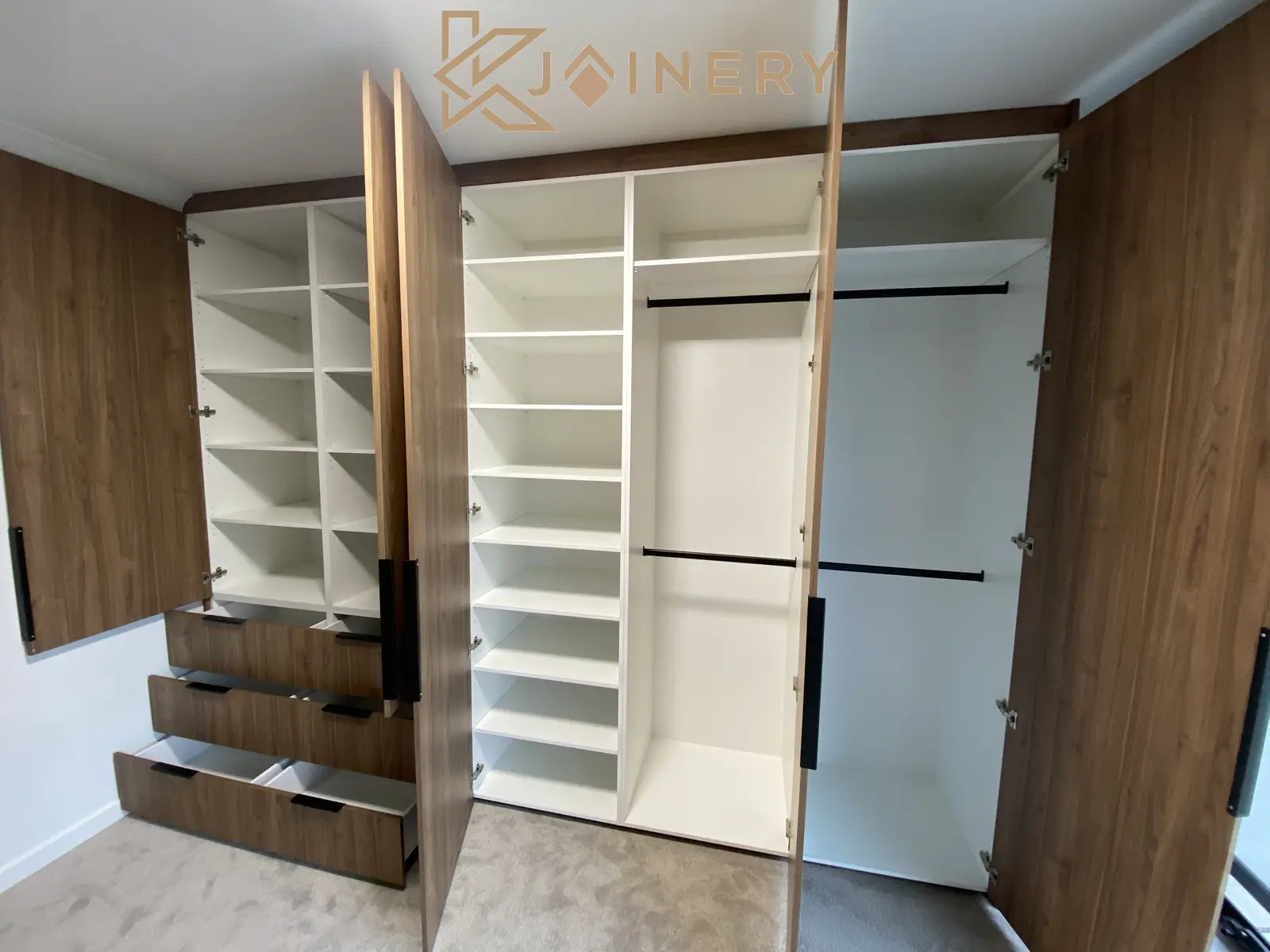
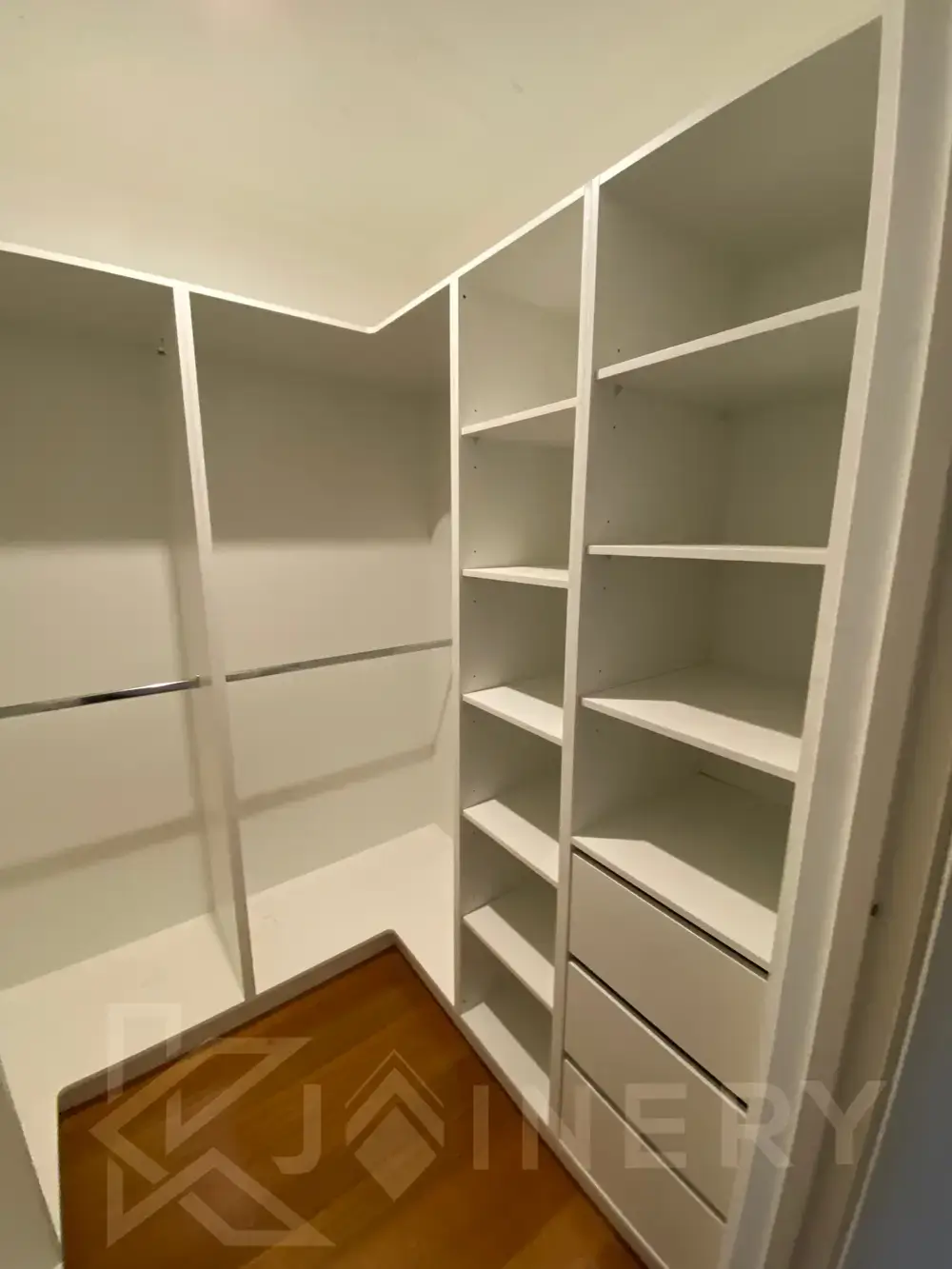
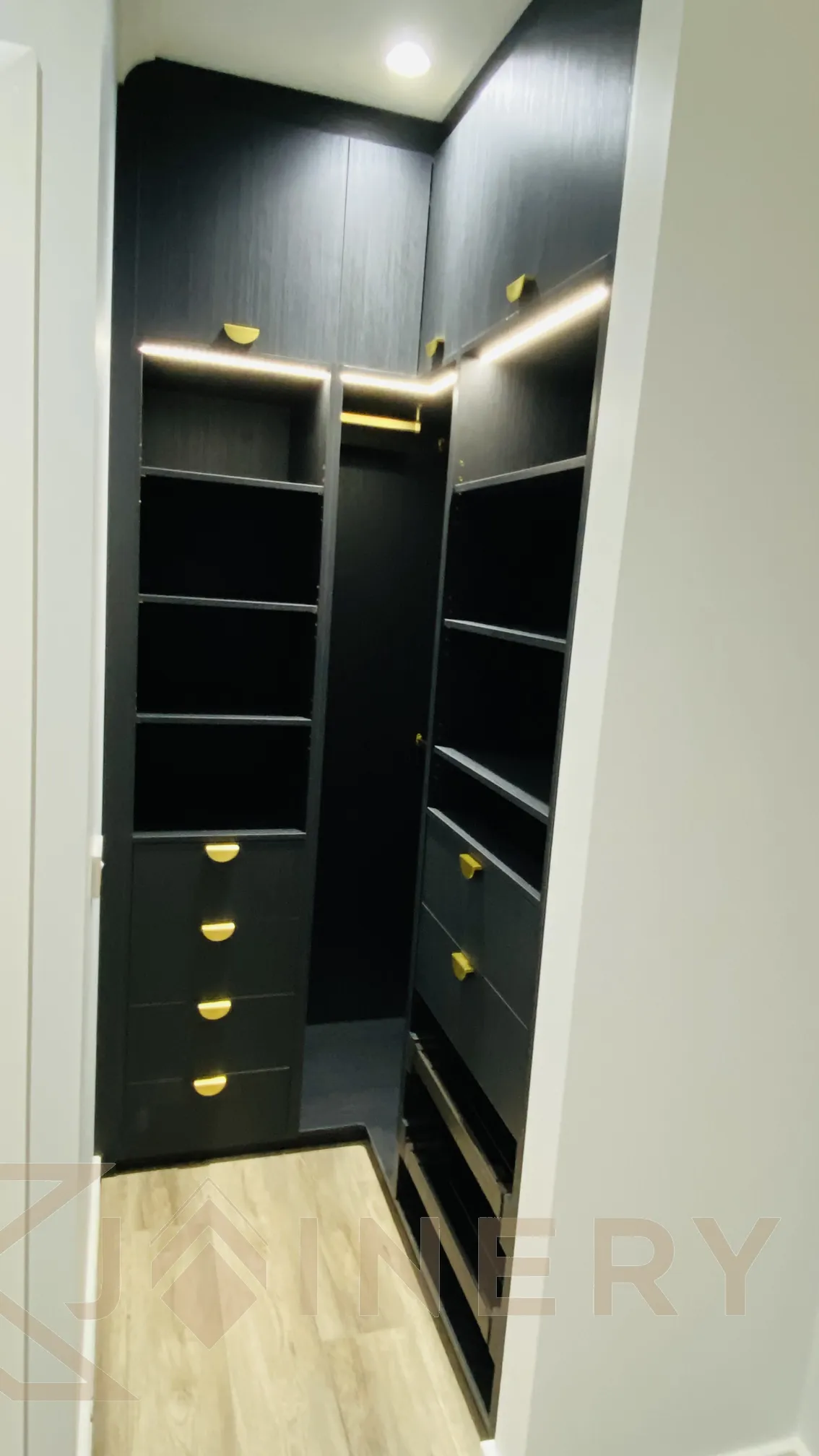
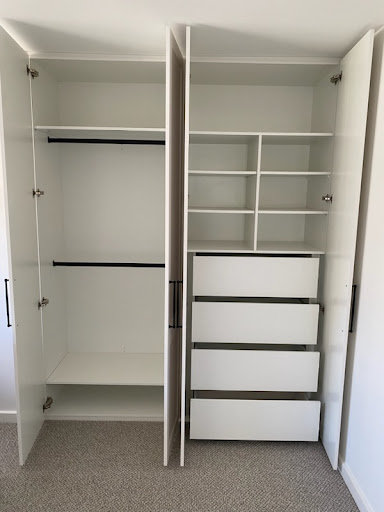
Integrated lighting and premium hardware sit at the top of the range.Clean white melamine internals keep cost down without looking cheap.
Where the Money Goes
A $4,500 wardrobe, broken down
People are often surprised how little of a wardrobe quote is profit and how much is material and labour. Here is roughly how a typical $4,500 built-in divides up.
34%
22%
18%
16%
10%
Board, doors and finish $1,530
Workshop build time $990
Installation on site $810
Hardware and internals $720
Design, measure and delivery $450
The line worth looking at twice is hardware. It is only around sixteen per cent of the job, but it is the part you touch every single day and the first thing to fail if it is cheap. Saving $200 there is the most expensive saving in the whole quote — drawer runners that sag after two years will annoy you long after you have forgotten what you paid.
Where quotes differ most
If you are comparing three wardrobe quotes that look wildly apart, the gap is almost never in the board. It is in the internals, the hardware brand, and whether installation and rubbish removal are actually included. Ask for those three to be itemised and most of the mystery disappears.
Built-In or Walk-In
Which type suits your room and budget
Quick answer
Built-in robes give more storage per dollar; walk-in robes give a better experience. A built-in uses a wall you already have, so almost all the money goes into storage. A walk-in needs floor space you stand in rather than store in, so you pay noticeably more for the same hanging capacity.
This is the decision that moves your budget most, and it is worth making before you talk finishes. A built-in wardrobe takes an existing wall and turns it into storage. Nothing is wasted on walking room, which is why it delivers more hanging metres per dollar than any other option.
A walk-in robe is a room you stand inside. That standing room is space you are furnishing but not storing in, so the cost per hanging metre climbs sharply. What you get in return is real: you can see everything at once, dress comfortably, and the room itself becomes a feature of the house.
Built-in robe
Uses an existing wall. Best storage per dollar. Suits standard bedrooms.
$2,800 – $7,000
Walk-in robe
Needs floor space. Custom internals and lighting. A dressing room, not just storage.
$4,500 – $15,000+
Freestanding
Cheapest up front, but wastes the gap above and beside it and moves with you.
$600 – $2,000
One thing we would say honestly: if your room is tight, do not force a walk-in. A well-planned built-in across a full wall will hold more than a cramped walk-in and leave the bedroom feeling larger. We have talked plenty of clients out of walk-ins for exactly that reason.
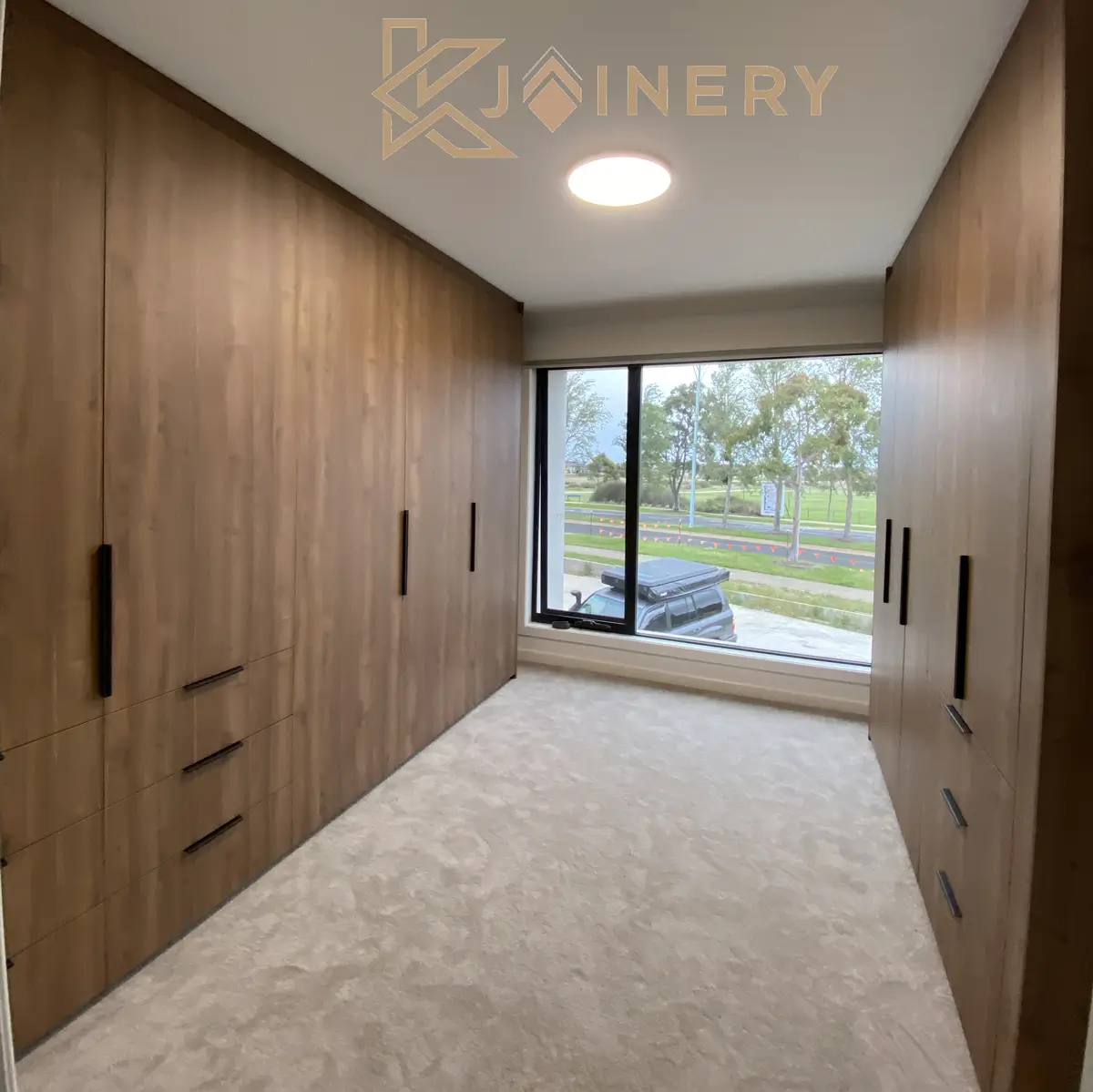
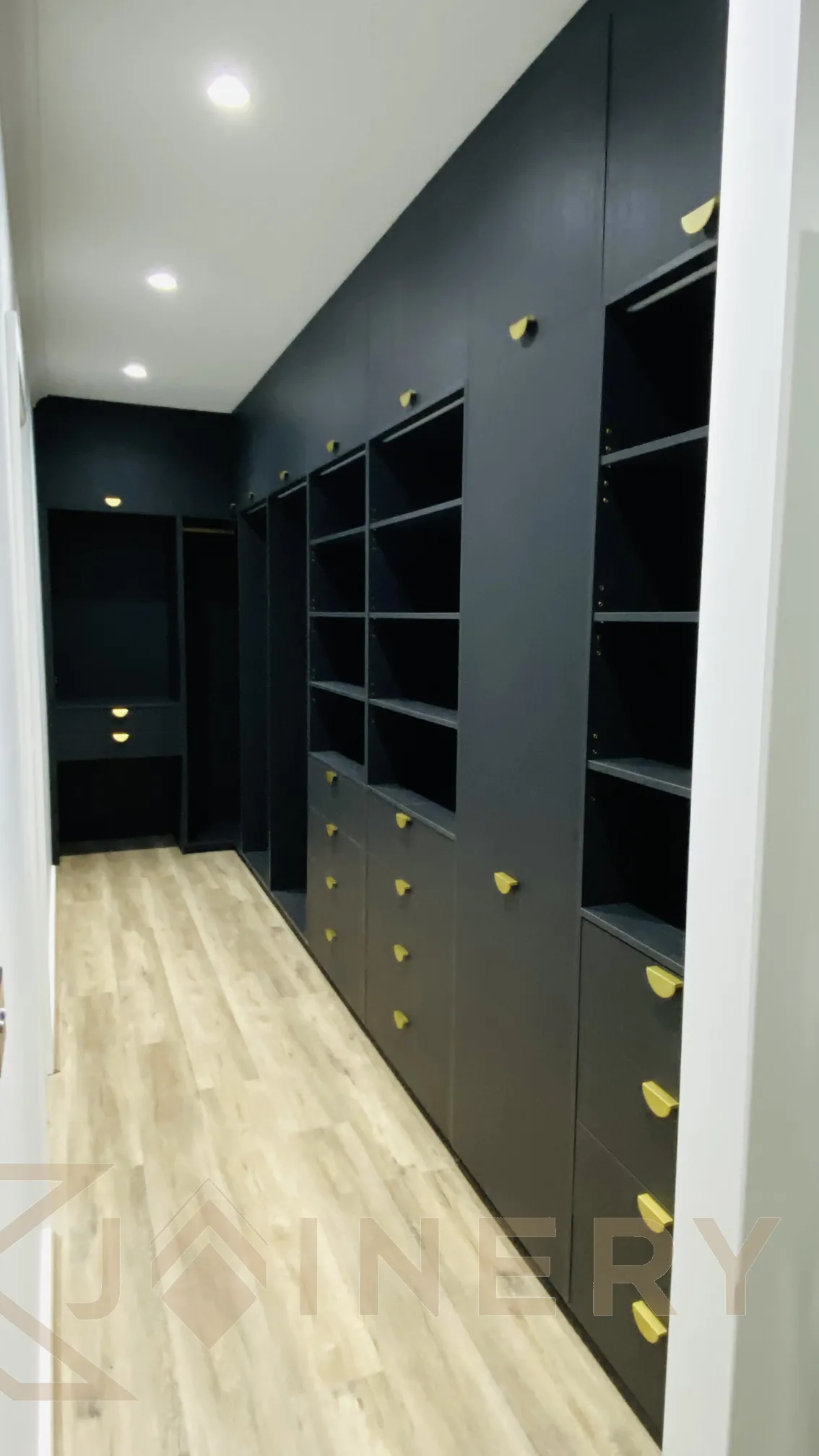
A built-in uses a wall you already have — the most storage per dollar.A walk-in is a room you stand in — a much higher cost per hanging metre.
What Goes Inside
Drawers inside the wardrobe, and what they add
Quick answer
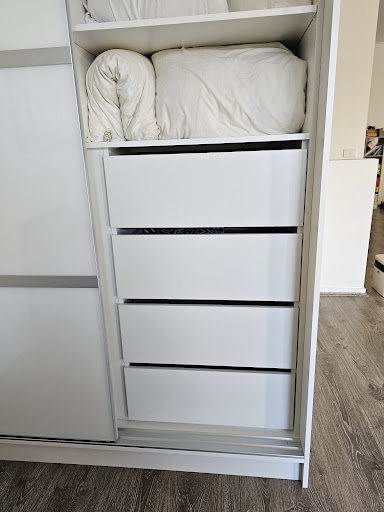
Internal drawers typically add $150 to $300 each depending on width and runner quality. A bank of four inside a robe is usually the single best upgrade you can make, because it replaces a chest of drawers and frees up floor space in the bedroom.
Ask us where to spend an extra few hundred dollars on a wardrobe and the answer is almost always the same: put drawers inside it. Shelves are cheap and people think they want them, then end up with folded piles that collapse the moment anything is taken from the middle. Drawers hold the same volume, keep it visible, and are far easier to live with.
The other advantage is what it removes from the room. A bank of internal drawers replaces a freestanding chest of drawers entirely, which usually gives back close to a square metre of bedroom floor. For smaller Melbourne bedrooms that trade is often worth more than the storage itself.
Internal drawers
Soft-close runners. Best single upgrade in most robes.
$150 – $300 each
Double hang
Two rails stacked for shirts and folded items. Nearly doubles hanging capacity.
Minimal extra
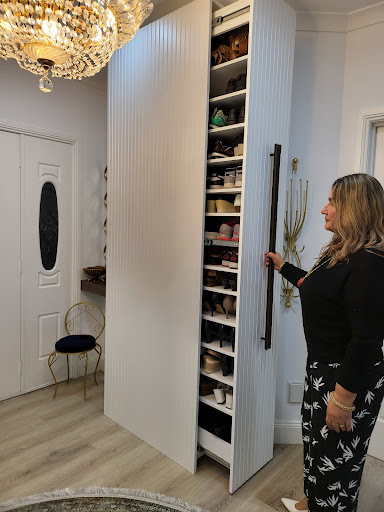
Pull-out shoe rack
Keeps pairs visible instead of stacked at the bottom.
$200 – $400
Adjustable shelving
Move shelves later as what you own changes. Worth doing everywhere.
Minimal extra
Integrated LED
Strip lighting on sensor. Needs an electrician.
$350 – $800
Drawers inside the robe do the work a chest of drawers used to — and give the bedroom floor back.
Spend Smarter
Five ways to get more wardrobe for the same money
None of these involve cutting quality. They are the trades we would make ourselves.
Go to the ceiling. The gap above a standard robe is dead space that still has to be dusted. Taking cabinetry full height adds a modest amount to the price and a surprising amount of storage.
Spend on hardware, save on finish. Melamine internals with quality soft-close runners will outlast painted internals with cheap ones, and cost less. Nobody sees the inside of a robe but you feel the runners daily.
Hinged doors instead of sliding. Sliding doors look tidy but you can only ever open half the robe at once, and they cost more. Unless the room is too tight to swing a door, hinged is usually the better buy.
Drawers over shelves. Slightly more per unit, considerably more usable. Four drawers inside the robe can replace a piece of bedroom furniture entirely.
Keep the opening where it is. Working with the existing wall and skirting keeps installation quick. Moving a robe to a different wall brings in patching, painting and sometimes power.
Bracket figures are useful but abstract. Most people are pricing one specific room, so here is what the same rate works out to across the rooms we are asked about most.
Kids' bedroom
Usually 1.8 to 2.4 m. Lower rail so they can reach, more shelving than hanging, room to change it later.
from $2,800
Spare or guest room
Around 2 m. Mostly long hang and shelves, minimal drawers. The easiest robe to keep cheap.
from $2,800
Main bedroom
Typically 3 to 4 m across a full wall. Double hang, long hang, a proper bank of drawers.
$3,500 – $5,000
Apartment or small bedroom
1.5 to 2 m, often floor to ceiling to claw back every millimetre. Sliding doors where a hinge will not swing.
from $2,800
Walk-in robe
Full custom fit-out, integrated lighting, often an island. Priced by the room rather than the wall.
from $4,500
Those figures surprise people, because a small robe is barely cheaper than a standard one. The reason is the floor: design, measure, delivery and a day on site cost the same regardless of width. What does change is the internals — a lower rail and more shelving in a child's robe costs no more today and saves rebuilding it when they are fifteen.
Width and installation dominate the price, which is why a small robe is rarely much cheaper than a standard one.
Reading a Quote
What a wardrobe quote should actually say
Quick answer
A proper wardrobe quote itemises board and finish, doors, internals, hardware brand, installation and rubbish removal. If those are bundled into one number, you cannot compare it against anything — and that is usually the point.
Most of the confusion in wardrobe pricing comes from quotes that are deliberately hard to compare. One page, one figure, no detail. Ask for the following six lines and three quotes that looked $2,000 apart will usually turn out to be for three different jobs.
Board and finish, named. Melamine, timber-look laminate or painted 2-pac, and which grade. "Quality board" is not a specification.
Doors, with the type stated. Hinged, sliding or mirrored, and whether the price includes the track and soft-close mechanism rather than adding them later.
Internals, listed individually. Number of drawers, metres of hanging rail, number of shelves. This is the single biggest source of difference between quotes.
Hardware by brand. Runners and hinges should be named, not described. It is the part that fails first and the easiest line to quietly downgrade.
Installation, included or not. Some quotes are supply-only and the install lands as a separate invoice. Ask directly.
Rubbish removal and making good. Who takes the old robe away, and who patches and paints where it was. Small items that become arguments.
One more thing worth asking: is the price fixed or an estimate. A fixed written quote after a physical measure is the only number you can actually plan around. An estimate given over the phone will move, and it almost never moves down.
If a quote will not itemise the internals and the hardware, you are not being given a price. You are being given a number.
Common Questions
Wardrobe costs, answered plainly
How much does a built-in wardrobe cost in Melbourne?
A custom built-in wardrobe in Melbourne generally costs between $2,800 and $7,000 supplied and installed. A simple 2.4-metre robe starts near $2,800, a standard one with drawers and sliding doors sits between $3,500 and $5,000, and a premium built-in runs $5,000 to $7,000. Walk-in robes are priced separately, from about $4,500.
What is the cost of a built-in wardrobe per metre?
Budget around $1,200 per linear metre, supplied and installed, with a practical minimum of about $2,800 per job. That makes a 2.4-metre robe roughly $2,880 and a three-and-a-half-metre wall roughly $4,200. Use it to sanity-check any quote: well under that usually means something has been left out.
Are built-in wardrobes cheaper than walk-in robes?
Yes. A built-in uses a wall you already have, so nearly all of the cost becomes storage, and it starts around $2,800. A walk-in robe needs floor space you stand in rather than store in and starts around $4,500, rising past $15,000 for a large fitout. For most standard bedrooms a built-in delivers more storage for the money.
How much do drawers inside a wardrobe cost?
Internal drawers typically add $150 to $300 each, depending on width and the quality of the runners. A bank of four is usually the best value upgrade in a robe because it can replace a freestanding chest of drawers and free up bedroom floor space.
Do built-in wardrobes add value to a Melbourne home?
Built-in robes are one of the more reliable joinery investments because buyers treat bedroom storage as essential rather than optional. A bedroom with a well-built robe presents better than one with a freestanding unit, and the cost is modest relative to most renovation work.
How long does a built-in wardrobe take to build and install?
After the design and measure are locked in, cabinetry is built to order over a few weeks. Installation for a standard built-in is usually a single day, with larger walk-in robes taking two to three days depending on lighting and internals.
Is a floor-to-ceiling wardrobe worth the extra cost?
Almost always. Height is the cheapest storage you can buy because the carcase, doors and installation are already there. Taking a robe to the ceiling adds a modest amount to the price, removes a dust-collecting gap, and adds a full shelf of seasonal storage.
What is the cheapest way to get a custom wardrobe?
Keep the robe on the existing wall, choose melamine internals rather than painted, use hinged doors instead of sliding, and put your money into quality soft-close hardware. That combination gives a robe that works properly for years without paying for finishes nobody sees.
Where We Build
Custom wardrobes across Melbourne
We design, build and install built-in wardrobes and walk-in robes across Melbourne, with most of our work in the west and south-east.
21 verified reviewers. Every one of them left five stars.
5.0★★★★★Rated 5.0 on Google
Drag to read more
IIman YusufAugust 2026
★★★★★
Thank you so much for transforming my walk-in wardrobe into a high-end space. You built a statement piece of furniture, and I can't get enough of it. It is worth every penny!
I highly recommend Meran and his team for outstanding craftsmanship and on-time delivery.
SSamantha ChakmaJuly 2026
★★★★★
We had a 70's kitchen that needed renovation and we went to Meran for that. We received quotes from many other cabinet makers but we are so glad we went with Meran.
Jenny SubandiJune 2026
★★★★★
Very happy with their excellent job for house renovation, bathroom renovation and cabinetry work that they did for me. Friendly and prompt service. Reasonably priced. Trustable team of tradies. Highly recommended.
Daria KozakApril 2026
★★★★★
I cannot thank Kjoinery enough. Responding to queries was fast, work was done at a very high level, communication with customers is fantastic. I am definitely going to cover all my furniture needs with their help in future. Really grateful for your work!
Such a great job,so happy with the outcome
Definitely recommend them,
Gracy RosalineNovember 2025
★★★★★
Amazing job — reliable, great quality, and very responsive. I’m extremely satisfied with the service. Meran is very easy to talk to, explains everything clearly, and really knows his work. Highly recommend.
We had Kjoinery / Mehran do our kitchen reno and we cannot possibly be happier with the end result. Every tradesperson we dealt with was respectful, professional, and easy to work with. They provided many thoughtful ideas and helped us get the design to exactly what we wanted.
From the design through to demolition and build, the whole process was smooth and well-managed. The attention to detail was excellent and the final result has completely transformed our home. Highly recommend Kjoinery for anyone looking for top quality work and a great experience from start to finish.
We used K Joinery for our Kitchen Renovation we are very impressed with the Amazing work by Mehran and His team.
The outcome is outstanding we went through a few companies but no one could really design the kitchen we had in mind until we found K Joinery and Mehran.
I highly recommend them.
Mary RomeoJune 2025
★★★★★
This was a challenging, customised job and the quality was good 👍🏿.
Stephen PeiLinJune 2025
★★★★★
May 2025.
I had some bookshelves made and installed recently.
Meran and crew did an excellent job; on time, on cost, excellent quality.
I highly recommend them.
Satyendra AluriJune 2025
★★★★★
Mehron did amazing work at our place in Williams Landing. He literally transformed our kitchen to a new contemporary design. He has been very patient since beginning of the project and did all the amendments as we requested, he never frustrates and always stays at client side to understand the vision and work accordingly.
I sincerely recommend him for any joinery works and he will certainly never disappoint anyone who opt to work.
Mehron, all the very best for your future endeavours and thank you once again for all the hard work and patience during the completion of our project 🙏
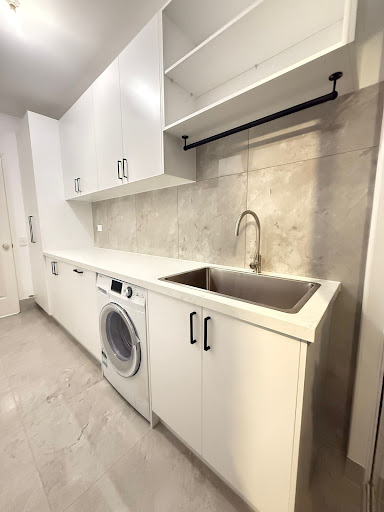
I’m extremely happy with the laundry cabinets Mehran built for us. He was professional, efficient, and paid great attention to detail. The quality of his work is excellent—the cabinets are well-built, functional, and have really transformed the space. Mehran was easy to communicate with and made sure everything was done to my satisfaction. I highly recommend him for any cabinetry work. Thank you, Mehran and Kjoinery.
Huge thank you KJoinery..
There is only one word you think of when you see their work….PERFECTION.
The service was highly professional and yet personal and friendly.
Their product is high end,but within a reasonable price.
The highlight of my house is my kitchen!!
I would not think twice before highly recommending kJoinery to anyone looking for class and perfection.
Anna.
Delivered and installed on time and on budget. Attention to detail and our requirements above expectations and an absolute pleasure to deal with. Highly recommended.
Amir MatinSeptember 2024
★★★★★
I recently worked with KJoinery for my cabinetry needs and was extremely impressed. The team was professional, efficient, and the quality of their work was exceptional. I customized the design to fit my needs and got great value for money. Highly recommend KJoinery for anyone in need of cabinetry services.
We recently worked with KJoinery for a custom cabinetry project in Rowville, and the experience exceeded our expectations. Mehran was incredibly attentive to our design preferences and ensured the cabinets were both functional and aesthetically pleasing. He was punctual, communicated clearly. for the quality of work provided, the cost was very reasonable, and there were no hidden fee or surprises. I highly recommend KJoinery to anyone looking for high-quality custom cabinetry and exceptional service.
Highly recommend Kjoinery for their quality and high standard of work!
Mehran was highly knowledgeable and guided us patiently to build our dream kitchen and bedroom joinery.
We couldn’t be happier with the workmanship and professionalism shown by Kjoinery throughout the entire process.
100% recommended to all friends and family.
Reza MoradiJune 2024
★★★★★
Highly recommended , the service and the pricing are the best ever I’ve experienced and looking forward to have another project to handed to them 👍👍👍
AUC ServicesMay 2024
★★★★★
We had a great experience with k joinery
Definitely recommend
Mehran and he is team was very professional
I highly recommend Kjoinery for their high standard work! Excellent and ethical quality .
Mehran was prompt , efficient and very trustworthy I couldn’t be happier and know that he will deliver professional work wherever he goes .very happy customer and will definitely recommend to anyone that needs good quality work .
Thank you Mehran 😊
We strongly recommend Kjoinery because Mehran makes the best kitchen and bathroom ! We had a great experience with him and he made sure he did a great job ! Whoever sees our kitchen/bathroom gives compliments and asks who made it. We have referred Mehran to many other friends and they were also happy with him. Also recently we bought another property and can’t wait for Mehran to do our kitchen and bathroom again! We are really excited !
Thank you so much for transforming my walk-in wardrobe into a high-end space. You built a statement piece of furniture, and I can't get enough of it. It is worth every penny!
I highly recommend Meran and his team for outstanding craftsmanship and on-time delivery.
SSamantha ChakmaJuly 2026
★★★★★
We had a 70's kitchen that needed renovation and we went to Meran for that. We received quotes from many other cabinet makers but we are so glad we went with Meran.
Jenny SubandiJune 2026
★★★★★
Very happy with their excellent job for house renovation, bathroom renovation and cabinetry work that they did for me. Friendly and prompt service. Reasonably priced. Trustable team of tradies. Highly recommended.
Daria KozakApril 2026
★★★★★
I cannot thank Kjoinery enough. Responding to queries was fast, work was done at a very high level, communication with customers is fantastic. I am definitely going to cover all my furniture needs with their help in future. Really grateful for your work!
Such a great job,so happy with the outcome
Definitely recommend them,
Gracy RosalineNovember 2025
★★★★★
Amazing job — reliable, great quality, and very responsive. I’m extremely satisfied with the service. Meran is very easy to talk to, explains everything clearly, and really knows his work. Highly recommend.
We had Kjoinery / Mehran do our kitchen reno and we cannot possibly be happier with the end result. Every tradesperson we dealt with was respectful, professional, and easy to work with. They provided many thoughtful ideas and helped us get the design to exactly what we wanted.
From the design through to demolition and build, the whole process was smooth and well-managed. The attention to detail was excellent and the final result has completely transformed our home. Highly recommend Kjoinery for anyone looking for top quality work and a great experience from start to finish.
We used K Joinery for our Kitchen Renovation we are very impressed with the Amazing work by Mehran and His team.
The outcome is outstanding we went through a few companies but no one could really design the kitchen we had in mind until we found K Joinery and Mehran.
I highly recommend them.
Mary RomeoJune 2025
★★★★★
This was a challenging, customised job and the quality was good 👍🏿.
Stephen PeiLinJune 2025
★★★★★
May 2025.
I had some bookshelves made and installed recently.
Meran and crew did an excellent job; on time, on cost, excellent quality.
I highly recommend them.
Satyendra AluriJune 2025
★★★★★
Mehron did amazing work at our place in Williams Landing. He literally transformed our kitchen to a new contemporary design. He has been very patient since beginning of the project and did all the amendments as we requested, he never frustrates and always stays at client side to understand the vision and work accordingly.
I sincerely recommend him for any joinery works and he will certainly never disappoint anyone who opt to work.
Mehron, all the very best for your future endeavours and thank you once again for all the hard work and patience during the completion of our project 🙏
I’m extremely happy with the laundry cabinets Mehran built for us. He was professional, efficient, and paid great attention to detail. The quality of his work is excellent—the cabinets are well-built, functional, and have really transformed the space. Mehran was easy to communicate with and made sure everything was done to my satisfaction. I highly recommend him for any cabinetry work. Thank you, Mehran and Kjoinery.
Huge thank you KJoinery..
There is only one word you think of when you see their work….PERFECTION.
The service was highly professional and yet personal and friendly.
Their product is high end,but within a reasonable price.
The highlight of my house is my kitchen!!
I would not think twice before highly recommending kJoinery to anyone looking for class and perfection.
Anna.
Delivered and installed on time and on budget. Attention to detail and our requirements above expectations and an absolute pleasure to deal with. Highly recommended.
Amir MatinSeptember 2024
★★★★★
I recently worked with KJoinery for my cabinetry needs and was extremely impressed. The team was professional, efficient, and the quality of their work was exceptional. I customized the design to fit my needs and got great value for money. Highly recommend KJoinery for anyone in need of cabinetry services.
We recently worked with KJoinery for a custom cabinetry project in Rowville, and the experience exceeded our expectations. Mehran was incredibly attentive to our design preferences and ensured the cabinets were both functional and aesthetically pleasing. He was punctual, communicated clearly. for the quality of work provided, the cost was very reasonable, and there were no hidden fee or surprises. I highly recommend KJoinery to anyone looking for high-quality custom cabinetry and exceptional service.
Highly recommend Kjoinery for their quality and high standard of work!
Mehran was highly knowledgeable and guided us patiently to build our dream kitchen and bedroom joinery.
We couldn’t be happier with the workmanship and professionalism shown by Kjoinery throughout the entire process.
100% recommended to all friends and family.
Reza MoradiJune 2024
★★★★★
Highly recommended , the service and the pricing are the best ever I’ve experienced and looking forward to have another project to handed to them 👍👍👍
AUC ServicesMay 2024
★★★★★
We had a great experience with k joinery
Definitely recommend
Mehran and he is team was very professional
I highly recommend Kjoinery for their high standard work! Excellent and ethical quality .
Mehran was prompt , efficient and very trustworthy I couldn’t be happier and know that he will deliver professional work wherever he goes .very happy customer and will definitely recommend to anyone that needs good quality work .
Thank you Mehran 😊
We strongly recommend Kjoinery because Mehran makes the best kitchen and bathroom ! We had a great experience with him and he made sure he did a great job ! Whoever sees our kitchen/bathroom gives compliments and asks who made it. We have referred Mehran to many other friends and they were also happy with him. Also recently we bought another property and can’t wait for Mehran to do our kitchen and bathroom again! We are really excited !
Thank you so much for transforming my walk-in wardrobe into a high-end space. You built a statement piece of furniture, and I can't get enough of it. It is worth every penny!
I highly recommend Meran and his team for outstanding craftsmanship and on-time delivery.
We had a 70's kitchen that needed renovation and we went to Meran for that. We received quotes from many other cabinet makers but we are so glad we went with Meran.
Very happy with their excellent job for house renovation, bathroom renovation and cabinetry work that they did for me. Friendly and prompt service. Reasonably priced. Trustable team of tradies. Highly recommended.
I cannot thank Kjoinery enough. Responding to queries was fast, work was done at a very high level, communication with customers is fantastic. I am definitely going to cover all my furniture needs with their help in future. Really grateful for your work!
Amazing job — reliable, great quality, and very responsive. I’m extremely satisfied with the service. Meran is very easy to talk to, explains everything clearly, and really knows his work. Highly recommend.
We had Kjoinery / Mehran do our kitchen reno and we cannot possibly be happier with the end result. Every tradesperson we dealt with was respectful, professional, and easy to work with. They provided many thoughtful ideas and helped us get the design to exactly what we wanted.
From the design through to demolition and build, the whole process was smooth and well-managed. The attention to detail was excellent and the final result has completely transformed our home. Highly recommend Kjoinery for anyone looking for top quality work and a great experience from start to finish.
We used K Joinery for our Kitchen Renovation we are very impressed with the Amazing work by Mehran and His team.
The outcome is outstanding we went through a few companies but no one could really design the kitchen we had in mind until we found K Joinery and Mehran.
I highly recommend them.
May 2025.
I had some bookshelves made and installed recently.
Meran and crew did an excellent job; on time, on cost, excellent quality.
I highly recommend them.
Mehron did amazing work at our place in Williams Landing. He literally transformed our kitchen to a new contemporary design. He has been very patient since beginning of the project and did all the amendments as we requested, he never frustrates and always stays at client side to understand the vision and work accordingly.
I sincerely recommend him for any joinery works and he will certainly never disappoint anyone who opt to work.
Mehron, all the very best for your future endeavours and thank you once again for all the hard work and patience during the completion of our project 🙏
I’m extremely happy with the laundry cabinets Mehran built for us. He was professional, efficient, and paid great attention to detail. The quality of his work is excellent—the cabinets are well-built, functional, and have really transformed the space. Mehran was easy to communicate with and made sure everything was done to my satisfaction. I highly recommend him for any cabinetry work. Thank you, Mehran and Kjoinery.
Huge thank you KJoinery..
There is only one word you think of when you see their work….PERFECTION.
The service was highly professional and yet personal and friendly.
Their product is high end,but within a reasonable price.
The highlight of my house is my kitchen!!
I would not think twice before highly recommending kJoinery to anyone looking for class and perfection.
Anna.
Delivered and installed on time and on budget. Attention to detail and our requirements above expectations and an absolute pleasure to deal with. Highly recommended.
I recently worked with KJoinery for my cabinetry needs and was extremely impressed. The team was professional, efficient, and the quality of their work was exceptional. I customized the design to fit my needs and got great value for money. Highly recommend KJoinery for anyone in need of cabinetry services.
We recently worked with KJoinery for a custom cabinetry project in Rowville, and the experience exceeded our expectations. Mehran was incredibly attentive to our design preferences and ensured the cabinets were both functional and aesthetically pleasing. He was punctual, communicated clearly. for the quality of work provided, the cost was very reasonable, and there were no hidden fee or surprises. I highly recommend KJoinery to anyone looking for high-quality custom cabinetry and exceptional service.
Highly recommend Kjoinery for their quality and high standard of work!
Mehran was highly knowledgeable and guided us patiently to build our dream kitchen and bedroom joinery.
We couldn’t be happier with the workmanship and professionalism shown by Kjoinery throughout the entire process.
100% recommended to all friends and family.
We had a great experience with k joinery
Definitely recommend
Mehran and he is team was very professional
KJoinery repliedthank you AUC Services, we are glad that you are satisfied with our work, we do value your five star and look forward if there is any other jobs coming up, best regards
I highly recommend Kjoinery for their high standard work! Excellent and ethical quality .
Mehran was prompt , efficient and very trustworthy I couldn’t be happier and know that he will deliver professional work wherever he goes .very happy customer and will definitely recommend to anyone that needs good quality work .
Thank you Mehran 😊
KJoinery repliedThank you so much for your glowing recommendation and kind words about Kjoinery! We are thrilled to hear that you are happy with our work, It's wonderful to know that Mehran was efficient, trustworthy, and professional in delivering excellent results for you. We truly appreciate your recommendation and are grateful for your support. We look forward to serving you and anyone you refer to us with the same level of excellence and dedication. Thank you for choosing Kjoinery!✨
We strongly recommend Kjoinery because Mehran makes the best kitchen and bathroom ! We had a great experience with him and he made sure he did a great job ! Whoever sees our kitchen/bathroom gives compliments and asks who made it. We have referred Mehran to many other friends and they were also happy with him. Also recently we bought another property and can’t wait for Mehran to do our kitchen and bathroom again! We are really excited !
KJoinery repliedWe are thrilled to hear that you had such a wonderful experience with our team at Kjoinery! We are dedicated to delivering exceptional work and providing our customers with beautiful results. Thank you for sharing your positive feedback with us. We look forward to the opportunity to work on your new property and create another stunning space for you to enjoy. Your satisfaction is our top priority, and we are grateful for your recommendation. Thank you for choosing Kjoinery!